Warehouse & Supply Chain Abbreviations Explained (WMS, SKU, FIFO, RFID)
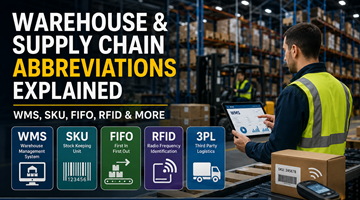
In this guide, we explain the most important warehouse and supply chain abbreviations used in logistics centers, fulfillment warehouses, transport operations, inventory management systems, and international distribution networks.
What Are Warehouse and Supply Chain Abbreviations?
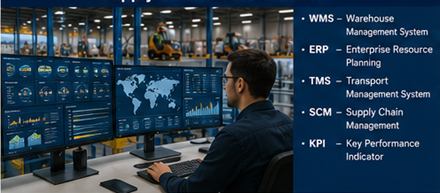
Warehouse and supply chain abbreviations are shortened logistics terms used in inventory management, cargo handling, warehouse software, order fulfillment, transport planning, and distribution operations. These abbreviations help logistics teams communicate faster and standardize operational processes.
Supply chain operations involve warehouses, carriers, suppliers, fulfillment centers, customs authorities, and customers. Using common abbreviations simplifies communication and improves operational efficiency across international logistics networks.
- Used in warehouse management systems
- Visible in inventory software
- Common in logistics reports
- Used during cargo handling operations
- Important for supply chain coordination
- Standardized across international logistics operations
WMS and Warehouse Software Abbreviations
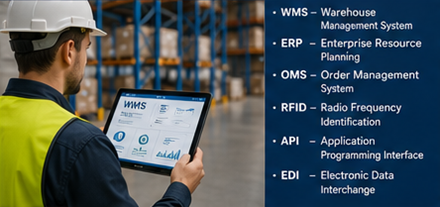
Warehouse management systems use many abbreviations related to inventory tracking, storage operations, shipment processing, and warehouse automation.
- WMS — Warehouse Management System
- ERP — Enterprise Resource Planning
- TMS — Transport Management System
- OMS — Order Management System
- RFID — Radio Frequency Identification
- API — Application Programming Interface
- EDI — Electronic Data Interchange
- IoT — Internet of Things
- AI — Artificial Intelligence
- KPI — Key Performance Indicator
Modern warehouses use digital software systems to manage inventory, automate workflows, optimize storage, and improve logistics efficiency.
Inventory Management Abbreviations
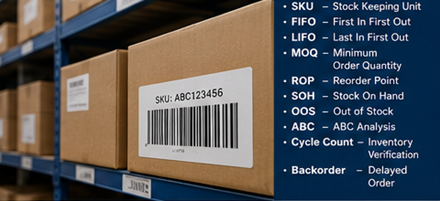
Inventory management abbreviations are essential for tracking products, organizing stock, and controlling warehouse storage operations.
- SKU — Stock Keeping Unit
- FIFO — First In First Out
- LIFO — Last In First Out
- ABC Analysis — Inventory Classification Method
- MOQ — Minimum Order Quantity
- ROP — Reorder Point
- SOH — Stock On Hand
- OOS — Out of Stock
- Cycle Count — Inventory Verification Process
- Backorder — Delayed Product Order
These terms help warehouses manage inventory rotation, reduce stock shortages, and improve order fulfillment accuracy.
Warehouse Operations and Cargo Handling Terms
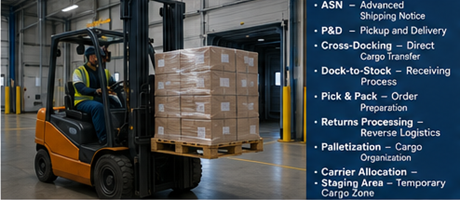
Daily warehouse operations use many abbreviations related to cargo handling, loading procedures, and distribution activities.
- ASN — Advanced Shipping Notice
- POD — Proof of Delivery
- P&D — Pickup and Delivery
- Cross-Docking — Direct Cargo Transfer
- Dock-to-Stock — Receiving Process
- Palletization — Cargo Organization on Pallets
- Pick & Pack — Order Preparation Process
- Returns Processing — Reverse Logistics Operation
- Carrier Allocation — Transport Assignment
- Staging Area — Temporary Cargo Zone
Efficient warehouse operations depend on organized cargo handling, fast loading procedures, and accurate shipment preparation.
3PL and Supply Chain Logistics Abbreviations
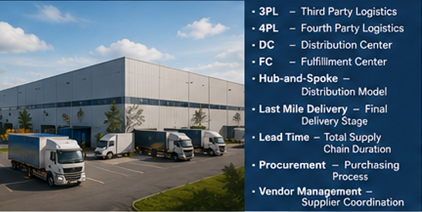
Supply chain logistics includes many abbreviations related to outsourcing, transportation, distribution, and fulfillment services.
- 3PL — Third Party Logistics
- 4PL — Fourth Party Logistics
- SCM — Supply Chain Management
- DC — Distribution Center
- FC — Fulfillment Center
- Hub-and-Spoke — Distribution Network Model
- Last Mile Delivery — Final Delivery Stage
- Lead Time — Total Supply Chain Duration
- Procurement — Purchasing Process
- Vendor Management — Supplier Coordination
These abbreviations are commonly used by logistics providers, eCommerce businesses, manufacturers, and international distribution companies.
Barcode and Tracking Technology Abbreviations
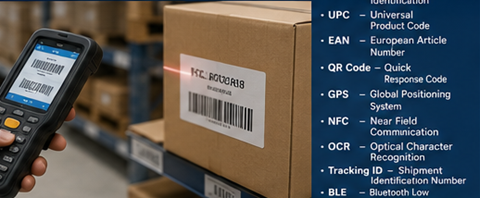
Modern warehouses use barcode and tracking technologies to improve inventory visibility and logistics automation.
- RFID — Radio Frequency Identification
- UPC — Universal Product Code
- EAN — European Article Number
- QR Code — Quick Response Code
- GPS — Global Positioning System
- BLE — Bluetooth Low Energy
- NFC — Near Field Communication
- OCR — Optical Character Recognition
- Scanning Station — Barcode Processing Area
- Tracking ID — Shipment Identification Number
Tracking technologies improve inventory accuracy, shipment visibility, and real-time logistics monitoring.
Cold Chain and Specialized Storage Abbreviations
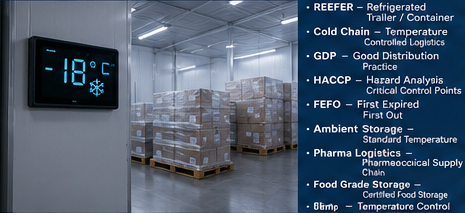
Cold chain logistics and specialized storage operations use additional abbreviations related to temperature-sensitive cargo and controlled environments.
- REEFER — Refrigerated Trailer or Container
- Cold Chain — Temperature Controlled Logistics
- GDP — Good Distribution Practice
- HACCP — Hazard Analysis and Critical Control Points
- Frozen Storage — Sub-Zero Warehouse Area
- Ambient Storage — Standard Temperature Zone
- FEFO — First Expired First Out
- Temperature Monitoring — Cargo Temperature Control
- Pharma Logistics — Pharmaceutical Supply Chain
- Food Grade Storage — Certified Food Warehouse
Cold chain logistics is especially important for food, pharmaceuticals, medical supplies, and temperature-sensitive products.
eCommerce Fulfillment and Distribution Abbreviations
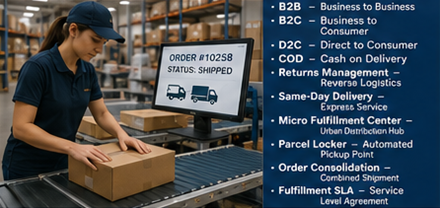
eCommerce logistics and online retail fulfillment use many specialized abbreviations for order processing and delivery operations.
- B2B — Business to Business
- B2C — Business to Consumer
- D2C — Direct to Consumer
- COD — Cash on Delivery
- Returns Management — Reverse Logistics
- Same-Day Delivery — Express Fulfillment Service
- Micro Fulfillment Center — Urban Distribution Hub
- Parcel Locker — Automated Pickup Point
- Order Consolidation — Combined Shipment Processing
- Fulfillment SLA — Service Level Agreement
Fast and accurate fulfillment operations are critical for modern eCommerce businesses and online marketplaces.
How Warehouse and Supply Chain Operations Work
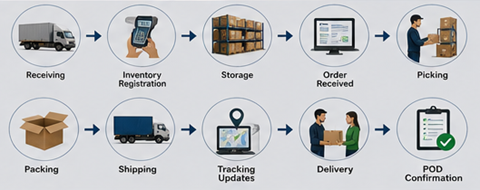
Warehouse and supply chain logistics involve multiple operational stages from inventory receiving to final delivery.
- Supplier sends ASN shipment information
- Warehouse receives cargo deliveries
- Inventory is scanned and registered in WMS
- Products are stored in warehouse locations
- Orders are received from customers
- Warehouse staff pick and pack products
- Shipments are assigned to carriers
- Tracking systems update shipment statuses
- Cargo is delivered to customers
- POD delivery confirmation is completed
Modern warehouses rely on automation, barcode scanning, inventory software, and integrated logistics systems to manage supply chain operations efficiently.
Warehouse Safety and Compliance Abbreviations
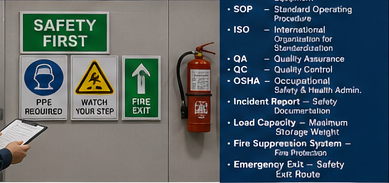
Warehouse operations also use safety and compliance abbreviations related to regulations, inspections, and operational standards.
- PPE — Personal Protective Equipment
- SOP — Standard Operating Procedure
- ISO — International Organization for Standardization
- QA — Quality Assurance
- QC — Quality Control
- OSHA — Occupational Safety and Health Administration
- Incident Report — Safety Documentation
- Load Capacity — Maximum Storage Weight
- Emergency Exit — Safety Evacuation Route
- Fire Suppression System — Warehouse Fire Protection
Warehouse safety procedures help protect employees, cargo, inventory, and logistics operations.
Conclusion
Warehouse and supply chain abbreviations are essential for modern logistics operations. Terms such as WMS, SKU, FIFO, RFID, ASN, 3PL, and POD simplify communication and improve operational efficiency across warehouses, distribution centers, and international supply chains.
Understanding these abbreviations helps logistics professionals manage inventory, optimize warehouse operations, coordinate shipments, and improve supply chain performance.
FAQ
What does WMS mean in logistics?
WMS stands for Warehouse Management System, software used to manage warehouse operations and inventory.
What is SKU in inventory management?
SKU means Stock Keeping Unit and identifies individual products inside inventory systems.
What does FIFO mean?
FIFO stands for First In First Out, an inventory rotation method where older stock is used first.
What is RFID used for?
RFID is used for wireless inventory tracking and warehouse automation.
What does 3PL mean in supply chain logistics?
3PL means Third Party Logistics, where logistics services are outsourced to specialized providers.
What is ASN in warehousing?
ASN stands for Advanced Shipping Notice and provides shipment information before cargo arrives.
What is cross-docking?
Cross-docking is a logistics process where cargo is transferred directly between vehicles with minimal storage time.
Why are warehouse abbreviations important?
They improve communication, simplify operations, and standardize logistics processes across supply chains.
eXus Dev